


National Teen Dating Violence Awareness Month

What is it?
Both chambers of Congress declared February as National Teen Dating Violence Awareness Month in 2010. In 2005 and 2013, the Violence Against Women Act was reauthorized, and the importance of raising awareness for teen dating abuse was highlighted. Healthy relationships tend to have a positive effect on development emotionally and relationship-wise. Dating violence does the opposite, however, and can result in suicidal thoughts, being antisocial, depression, anxiety, and engagement in unhealthy behaviors (alcohol and drug use, for example).
Each year, teens, families, and others raise awareness about teen dating violence through TDVAM (Teen Dating Violence Awareness Month). The 2023 theme is "Be About It;" be about education, advocacy, empowerment, and "amplify[ing] the voices of teens, young adults, and those who support them by uplifting positive, healthy, and safe relationships (Love is Respect)."
Statistics
Teen dating violence affects nearly 10% of all teenagers (between the ages of 12 and 18) throughout the U.S. An estimated 1 in 10 teens will experience dating violence, and before they become adults, 1 in 3 U.S. teens experience physical, sexual, or emotional abuse from someone they're in a relationship with. 43% of U.S. college women report experiencing violent or abusive dating behaviors.
Teens ages 12-19 experience the highest rates of rape and assault. Approximately 10% of teens were victims of physical violence from an intimate partner in the last year. Girls are more vulnerable to experiencing this kind of violence, and because of this are more likely to experience long-term issues such as suicide attempts, eating disorders, and drug use. Violent behaviors can also be picked up and brought into future relationships, much like how young children are taught that sometimes kids bully other kids because they themselves are bullied at home.
Further statistics:
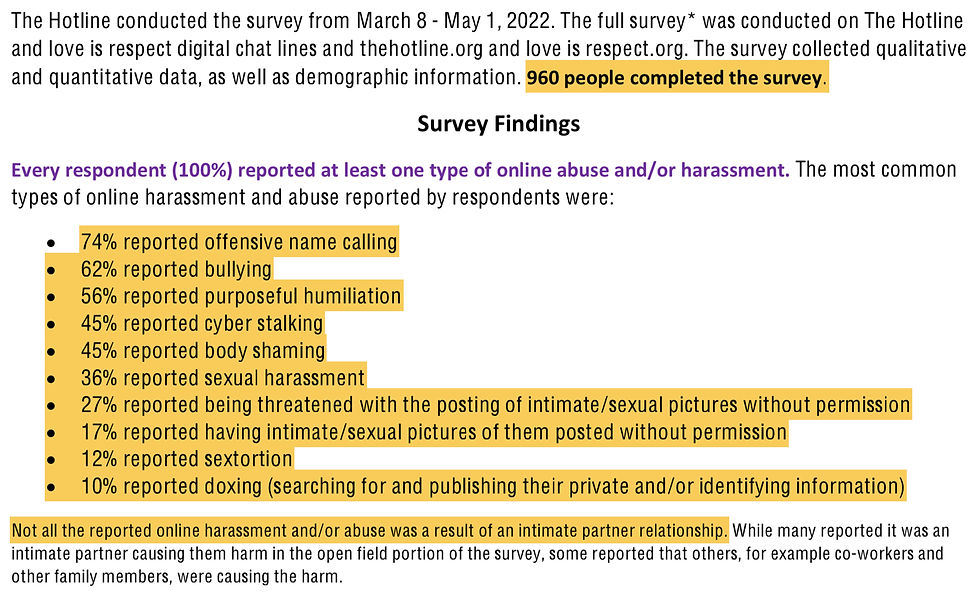
National Domestic Violence Hotline, 2022 Online Harassment and Abuse Survey Results Summary.
Few people who identified as male completed the survey, but out of those, 31% were less likely to seek help or support than those who identified as non-male. People ages 13-18 were 43% less likely than other age groups to seek support or help. 50% of the people who did seek help spoke with friends, family, or a trusted adult. Of the people who experienced online harassment or abuse, 67% reported it was gender related, and 34% reported it was related to sexual orientation.
How to identify it
Dating violence is defined as a pattern, and tends to involve a series of abusive behaviors over time, but the first instance of abuse is also dating violence. Relationship abuse is all about power and control. A person may be unwilling to leave their relationship at the moment, but abusive partners are unlikely to change their behavior.
All relationships exist on a spectrum from healthy to abusive, with unhealthy relationships in the middle.
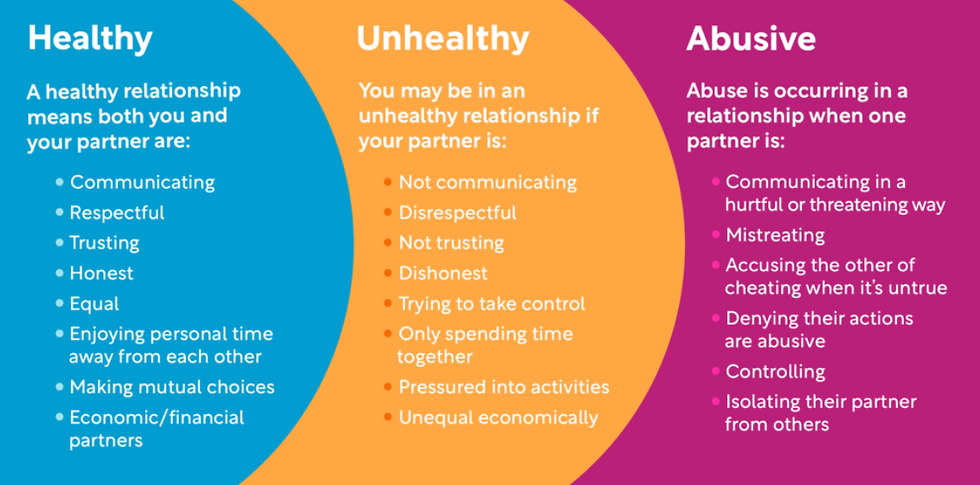
love is respect, Relationship Spectrum
Red flags/warning signs in teen relationships:
Excessive jealousy or insecurity | Explosive temper |
Invasions of your privacy | Preventing you from going out or talking to other people; isolating you from friends or family (physically, financially, or emotionally) |
Unexpected bouts of anger or rage | Constantly monitoring your whereabouts and checking in to see what you are doing or who you are with |
Unusual moodiness | Falsely accusing you of things |
Pressuring a partner into unwanted sexual activity | Vandalizing or ruining your personal property |
Blaming you for problems in the relationship and not taking any responsibility for the same | Taunting or bullying; putting you down frequently, especially in front of others |
Controlling tendencies | Threatening or causing physical violence |
Checking your phone, email, or social media accounts without your permission. | Any possessiveness or controlling behavior |
Teen Dating Violence, Signs of Teen Dating Violence; love is respect, Warning signs of abuse
There are several forms of physical abuse: physical, emotional, verbal, sexual, financial, digital, and stalking. Click here to read more about these.
Drugs and Alcohol
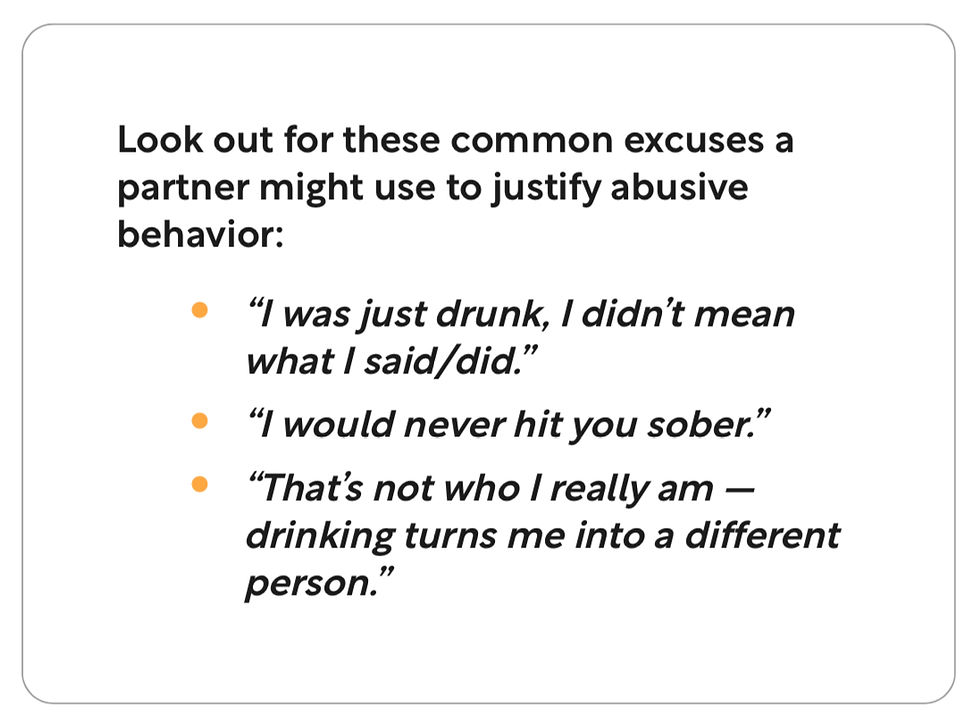
Whether or not you or your partner are under the influence, you never deserve to experience abuse. Drugs and alcohol have several risk factors, such as intensified and quickly shifting emotions and unsafe situations developing. "Your partner's actions while under the influence of drugs and alcohol are still a reflection of their personality, and if your partner is violent when they're drunk or high, it's probably a matter of time until they're abusive while sober, too (Love is Respect)."
Trust
Trusting someone means you find them reliable, have confidence in them, and feel safe with them. True trust takes time to build, and individuals must decide whether they trust each other: trust cannot be demanded or proven. Emotional boundaries are based on trust. Circumstances such as saying "I love you," and trust being broken in the past can challenge emotional boundaries.
Media and Relationships
Pop culture is infamous for the romanticization of unhealthy relationships. Media that glorify these things can lead audiences to believe that unhealthy power dynamics are okay. They are not. "The lack of healthy relationship representation can cause audiences to believe that healthy relationships do not exist in real life, which is not true (Love is Respect)." The lack of consent, or "implied consent" is common in media, and when audiences see this as comedic or entertaining, they can begin to believe that it's okay. Touching someone without their consent is never okay. It is important that we work towards seeing healthier relationship representation in our media.
Communication
When a partner brings up a concern or issue in a relationship, it's important that their partner listens, understands, and doesn't dismiss their feelings. This can usually lead to adjustments and/or compromise. It is normal to have disagreements in relationships. It is not normal to argue everyday or feel like your partner does not have the same values you do. In a healthy relationship, partners know their limits based on open communication, and feel comfortable communicating if something changes. "Sex isn't currency (Love is Respect)," and you don't owe your partner anything. Your partner also should not claim you don't care about them because you are establishing boundaries.
What To Do
When experiencing online harassment and abuse, most respondents turned to friends, family, or a trusted adult. Sharing validating information, safety resources, and developing specific tools for supporters on how to support someone experiencing any kind of abuse could create safer outcomes for those impacted.
Awareness efforts that validate experiences of harassment, abuse, and reduce shame could cause more people (especially young people) to seek support. We should be about education, engagement, safety online, and empowerment. "When we reduce love to only a feeling, we do ourselves a disservice. Each of us deserves people in our lives who not only say they love us but also act like it (Love is Respect)." "Once we know better, we can do better. We must be about moving toward healthy relationships, not just talking about them (Love is Respect)!"
Identify
Ask yourself:
Is my partner supportive of me and my decisions for myself, both physically and emotionally? | Does my partner demonstrate their trustworthiness by acting in accordance with what they say? |
Is my partner consistent in their actions and behaviors? | Are you both able to comfortably spend time apart from one another? |
love is respect, Emotional boundaries
Also ask these questions about yourself.
Digital Boundaries
Consider digital boundaries. Ask yourself:
Is it okay to tag you in posts or check-in places together? | What are the expectations for communication through texting or social media? |
Do we post our relationship status publicly? | Is it okay to use each other's devices, and when if so? |
Is it okay to follow or friend other people in my life? | Is it okay to post about our relationship publicly? |
love is respect, Digital boundaries
Your boundaries can always change, and being comfortable with something in the beginning doesn't mean you have to be comfortable with it always. The opposite can also be true: you can become comfortable with something that in the beginning, you were not.
Track Abuse
Keeping track of abusive incidents will enable you to better identify specific red flags.
Keep a journal of what you experience, including descriptions of how the incident made you feel. | Document any injuries, no matter how small (with photos if possible) |
Write down statements you, your partner, or any witnesses make before, during, or after the abuse. | Seek medical care, even if there are no visible injuries, especially if you have been strangled or choked. |
Record dates, times, and descriptions of incidents | File a report with the police, if you determine that it's safe for you to do so. |
love is respect, Documenting Abuse
Your partner might even admit to abusing you in a message or social media post, whether or not they intend to.
Set Boundaries
Communication can be hard, especially when setting physical boundaries. Stop, think, talk, and listen. Consider:
Find the right time. | Be honest. |
Talk face to face. | Check your body language. |
Don't attack each other. | Use the 48 hour rule. |
love is respect, Physical boundaries
To read more, click here.
School Resources
If something happens at school, there are departments that can assist you. "Trusted staff members can inform you on the process of asserting your rights and give perspective about the outcomes it can provide, but be sure to find out this information before disclosing the abuse you've personally experienced (Love is Respect)." You should assume that school employees are mandated reporters, even if they know that reporting may cause you harm. Rules on this, however, vary state by state. Identify a teacher or counselor you feel comfortable speaking to if you're prepared to discuss your situation, knowing it may be reported to authorities. "If a survivor is under 18, mandatory reporting laws may require that reports made to school staff are not kept confidential (Love is Respect)."
Other Assistance
If you think you are in an abusive relationship, consider the following:
Reaching out to a trusted friend, teacher, parent, or mentor | Seek the guidance of a school counselor or therapist |
Spending more time with individual with whom you are comfortable with | Calling the National Domestic Violence Hotline at 800-799-SAFE (7233) |
Getting involved with activities you enjoy that will allow you to associate with positive people | |
Teen Dating Violence , Signs of Teen Dating Violence
Lastly, check our resources and works cited at the bottom of this article.
Conclusion
Teen dating violence is a very prevalent issue, but fortunately we have many resources, programs, and organizations to raise awareness, show support, and help victims. GRIP strives to be one of those organizations by raising awareness about the issue, speaking to our girls on how to conduct themselves in relationships (for their own good and for their partner's own good), and giving girls the resources they need to seek help.

Comments